Technology teams face growing pressure to deliver faster, adopt new technologies, and meet changing business demands. However, traditional hiring models may limit flexibility and access to specialised skills.
This is why staff augmentation and offshore delivery models are gaining importance, helping businesses access skilled talent, expand development capacity, and build scalable technology teams without increasing permanent workforce commitments.
Key Takeaways
- Choose a team structure that matches the project’s technical requirements and expected workload.
- Use staff augmentation to address skill gaps while retaining control over project priorities and delivery.
- Consider offshore software development when additional development capacity or a longer-term team is needed.
- Plan for communication, knowledge sharing and clear responsibilities across distributed teams.
- Combine internal teams with external expertise when business requirements call for a flexible approach.
Why Businesses Need More Flexible Technology Teams
Technology requirements constantly evolve, creating demand for specialised skills in areas such as cloud, cybersecurity, and software development. Hiring permanent employees for every requirement may not be practical.
Businesses can adopt a flexible workforce model combining internal teams for strategic control, augmented professionals for specialised skills, and dedicated offshore teams for ongoing development. This approach helps align workforce capacity with changing project needs while retaining control over critical business functions.
How Staff Augmentation Supports Global Teams
Staff augmentation allows businesses to add external professionals to their existing technology teams. These professionals contribute to defined projects or functions while working within the client’s established processes and delivery environment.
For example, a company developing a new digital product may have an experienced internal team but lack the DevOps expertise needed to improve its deployment processes. Bringing in a specialist can address that gap without requiring the company to recruit for a permanent position immediately.
Key Benefits of Staff Augmentation
1. Access to Specialised Skills: Engage experts in cloud, cybersecurity, DevOps, software engineering, and data engineering.
2. Flexible Workforce Expansion: Scale technical resources based on changing project demands.
3. Greater Delivery Control: Manage augmented professionals within your existing teams and workflows.
4. Faster Talent Acquisition: Address urgent skill gaps without lengthy recruitment processes.
5. Adaptability: Adjust team capabilities as technology requirements and business priorities evolve.
However, success depends on effective onboarding, clear responsibilities, technical oversight, and performance management.
Where Offshore Software Development Fits
Offshore software development gives businesses access to development capabilities in other countries. Depending on the engagement, this may involve adding individual professionals to an internal team or working with a dedicated team for ongoing development.
Two common arrangements serve different needs.
| Aspect | Staff Augmentation | Dedicated Offshore Team |
|---|---|---|
| Best suited for | Filling specific skill gaps or increasing existing team capacity | Supporting ongoing development or larger projects |
| Team structure | External professionals work alongside the internal team | A dedicated group works on the business’s development requirements |
| Project management | The business retains direct oversight of the work | Responsibilities depend on the agreed engagement and delivery model |
| Typical requirement | Additional expertise for a particular function or project phase | Sustained development capacity across an ongoing roadmap |
The right choice depends on the project’s duration, the skills required, the level of internal management available and how responsibilities will be divided.
Why a Flexible, Hybrid Approach Can Work
Businesses do not always need to choose between an entirely internal team and a fully external delivery model. A combination can provide a practical balance.
An internal team might retain product ownership, architecture and business-critical decisions, while augmented professionals support specific technical functions. A dedicated offshore team may handle a sustained stream of development work, with additional specialists brought in when new requirements arise.
This arrangement allows team composition to change as the roadmap develops. It can also help businesses avoid committing to a fixed team structure before the longer-term workload is clear.
For this approach to work, businesses need defined ownership, documented processes, suitable access controls and regular communication. They should also consider knowledge transfer and continuity so that important project information remains available as team members or requirements change.

How Sebone Technologies Enables Flexible Team Building
Different projects require different levels of technical support. Sebone Technologies’ Smart Team offering helps businesses extend their capabilities by adding technology professionals or building dedicated development teams, depending on their requirements.
Staff augmentation can help businesses fill specific skill gaps within existing teams, while dedicated teams can support ongoing development work. Sebone Technologies also offers Employer of Record services in India for businesses that need support with local employment arrangements.
Renowned as a staff augmentation company in Bangalore, Sebone Technologies gives businesses options to organise their technology teams around project needs, existing capabilities and changing workloads. Choosing the right model helps align technical resources with development priorities.
To Conclude
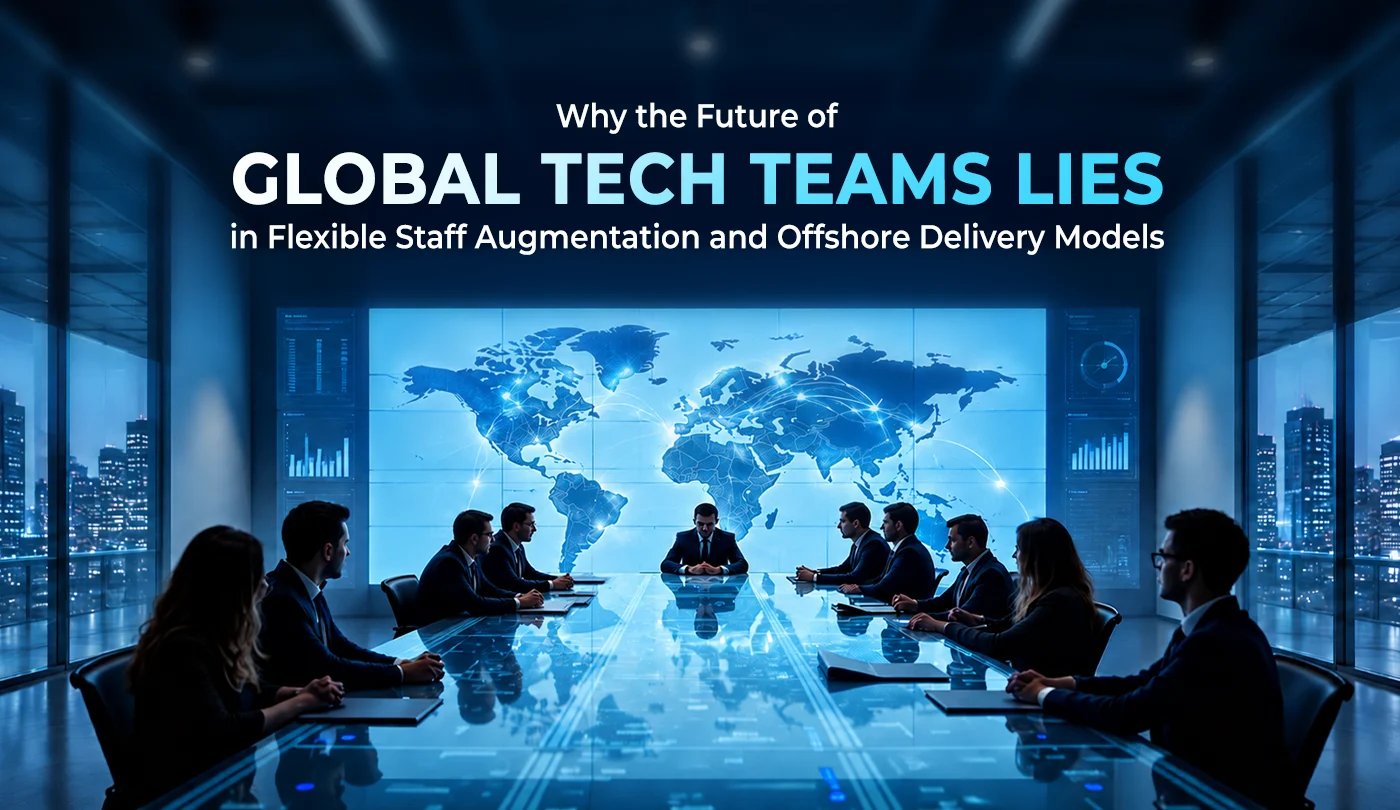
The future of global tech teams will depend on how well businesses balance internal expertise with the flexibility to bring in external talent when needed. Staff augmentation and offshore delivery give businesses different ways to fill skill gaps, manage changing workloads and support ongoing development without committing to a fixed team structure for every requirement.
The key is to choose a model that fits the work, keeps responsibilities clear and supports effective collaboration. With the right approach, businesses can adapt their technology teams as priorities evolve while maintaining ownership of project direction and delivery.
FAQ’s
1. What is the difference between staff augmentation and offshore delivery?
Staff augmentation adds external professionals to an existing team, while offshore delivery involves accessing development capabilities in another country through individual resources or dedicated teams.
2. When should a business choose staff augmentation?
Staff augmentation is suitable when a business needs specialised technical skills, additional development capacity or temporary workforce support while retaining direct project management.
3. Is offshore software development suitable for long-term projects?
Yes. Dedicated offshore development teams can support long-term product engineering, application development, maintenance and other ongoing technology initiatives.
4. Why do global companies hire technology professionals in India?
India offers access to a large technology talent ecosystem, established engineering capabilities and workforce delivery options that support global technology operations.
5. Can businesses combine staff augmentation and dedicated offshore teams?
Yes. Businesses can use augmented professionals for specialised roles while engaging dedicated offshore teams for sustained development activities.