
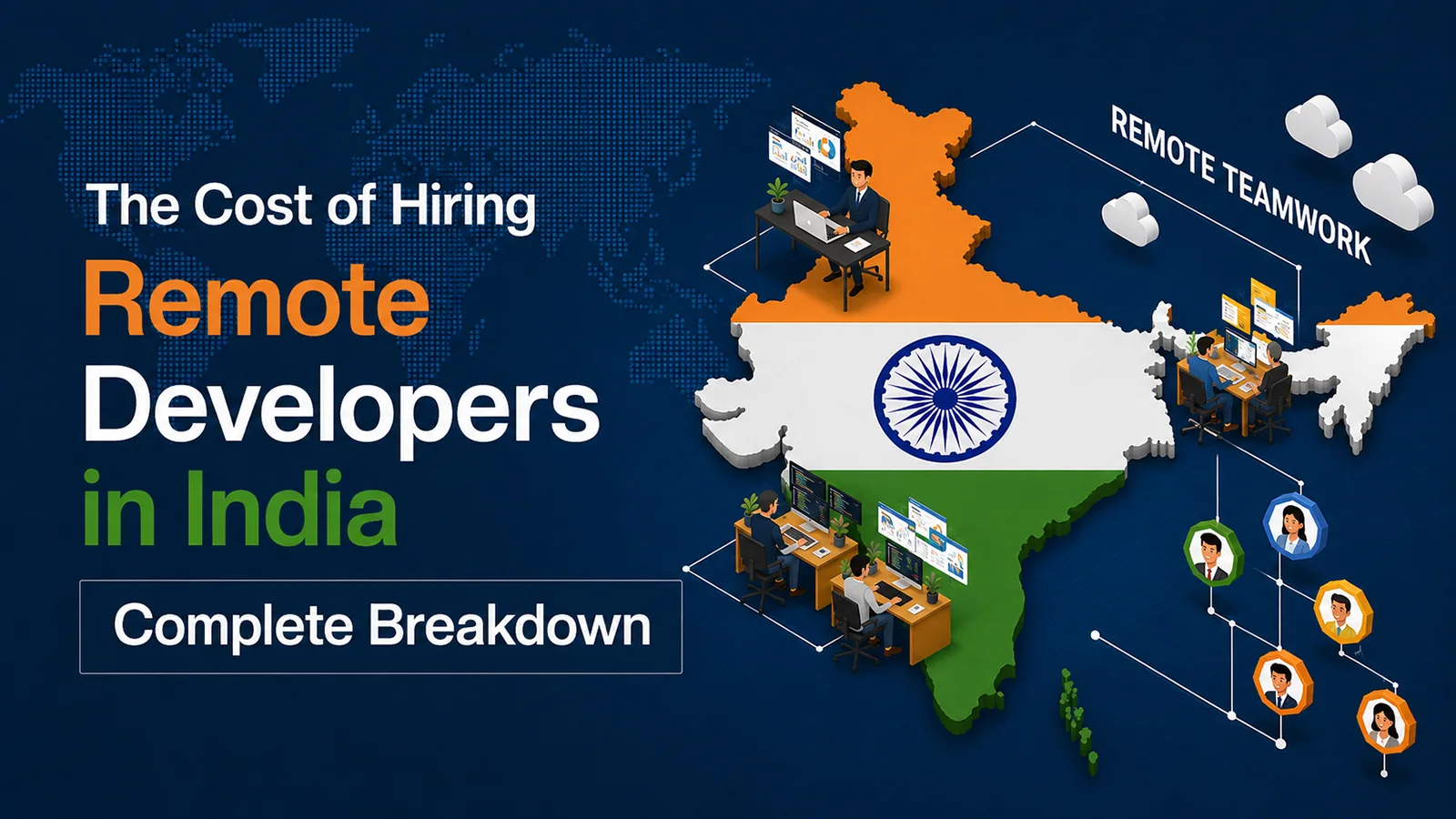
Hiring remote developers in India can give businesses access to a broad technology talent pool without the cost of building a large local team. However, the cost of hiring remote developers in India depends on more than a developer’s salary or hourly rate.
Experience, technical skills, project requirements, hiring model, and the level of support required can all affect the overall cost.
For businesses planning to hire remote developers in India, understanding these factors can help them make a more informed hiring decision and plan their technology budgets more effectively.
What Affects Remote Developer Cost in India?
For businesses looking to hire remote developers in India, there is no single cost. The final cost depends on factors such as experience, technical expertise and project requirements.
Experience and expertise
Experience is one of the key factors affecting developer costs.
- Junior developers typically handle defined development, testing and maintenance tasks.
- Mid-level developers can take on feature development, integrations and broader project responsibilities.
- Senior developers and specialists are suited to complex development, architecture and technical leadership.
Technology and skill set
The technology stack can also affect the cost. Standard software development roles may fall within a lower range, while specialised skills in cloud, DevOps, AI/ML, data science and software engineering may command higher rates.
Project complexity
The scope and complexity of the project can influence the level of expertise required. Complex applications, integrations, architecture requirements and tight timelines may require more experienced developers.
Indicative Cost Ranges
Remote developer costs in India vary by experience, specialisation and project requirements. As a broad market indication, businesses may encounter:
| Developer profile | Indicative hourly range |
|---|---|
| Junior developer | $15–$25 |
| Mid-level developer | $25–$40 |
| Senior developer | $40–$70+ |
| Specialised technology roles | $30–$90+ |
These are tentative market ranges, not fixed pricing. Actual costs can vary based on the technology, project scope and hiring model.
Hiring Models for Remote Developers
The way a business hires developers can have as much impact on cost as the developer’s experience.
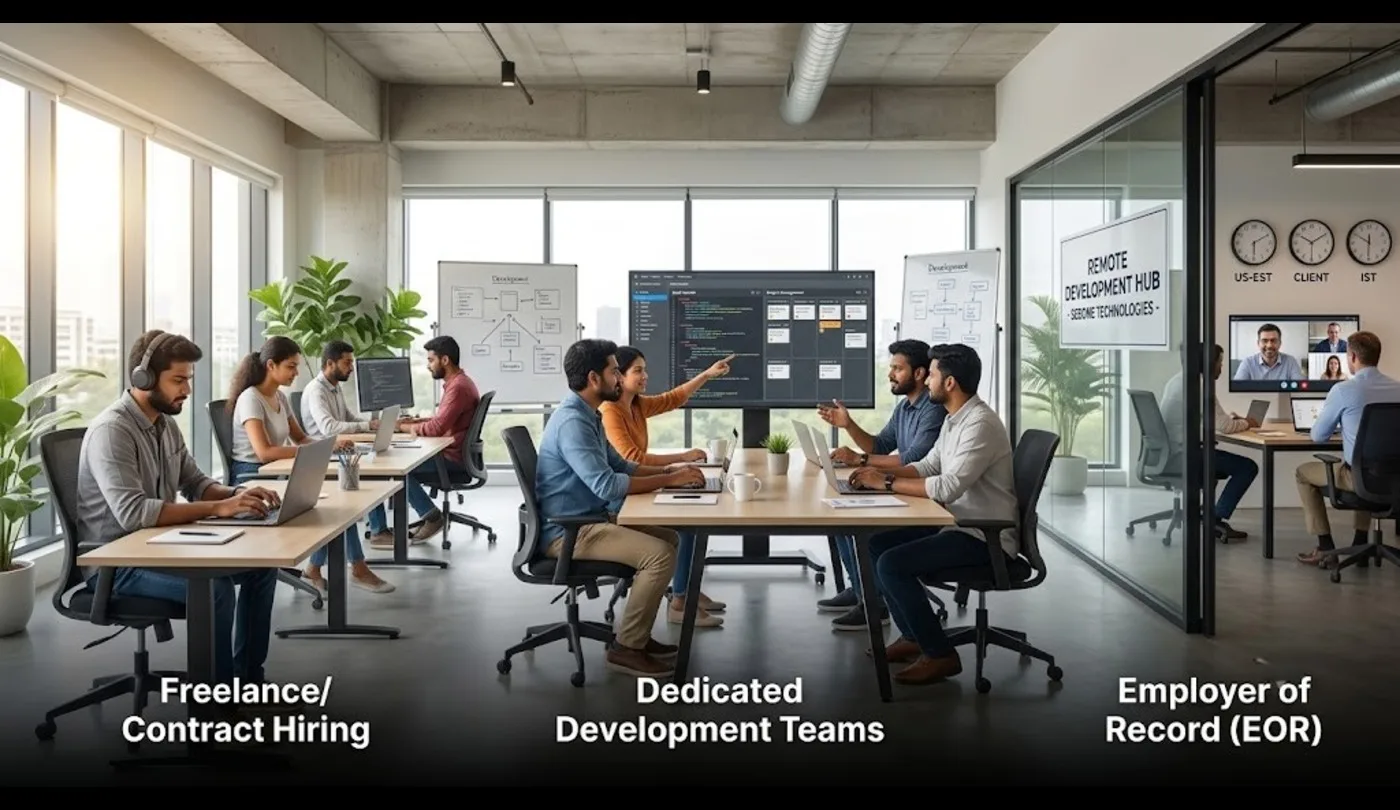
Freelance or contract hiring
Freelancers can be suitable for short-term or clearly defined projects. Businesses generally pay for the agreed work or hours without taking on a long-term employment commitment.
However, managing individual contractors can require additional effort for coordination, project management and continuity.
Dedicated development teams
A dedicated team can be a better fit when a business needs ongoing development capacity rather than a single developer.
With Sebone Technologies’ Smart Team model, businesses can access dedicated development teams or augment their existing teams with technology professionals. The model can also include a dedicated offshore development centre for a specific project.
This approach can be useful when businesses need to scale development capacity while retaining visibility into the team’s work and project processes.
Employer of Record
Businesses that want to legally employ remote developers in India without establishing a local legal entity can consider an Employer of Record model.
Sebone Technologies provides EOR services that include talent sourcing support, onboarding, payroll processing, employee support and tax compliance. This can help businesses hire in India without taking on the process of establishing their own entity.
The overall cost will depend on the developer’s compensation and the services included in the EOR arrangement.
Hidden Costs to Consider
Looking only at a developer’s salary or hourly rate may not reflect the total cost of remote hiring.
Businesses should also consider:
- Recruitment and hiring
- Onboarding and training
- Payroll and compliance
- Equipment and software
- Project management and coordination
- Communication and collaboration tools
- Infrastructure and technology requirements
The actual cost can vary depending on whether a business hires individual remote developers, builds a dedicated team or works with a technology partner.
How to Control Remote Developer Costs
Cost management does not necessarily mean choosing the lowest developer rate. A better approach is to align the hiring model with the project’s requirements.
Businesses can:
- Define the required skills and experience before hiring.
- Choose developers based on project requirements rather than seniority alone.
- Consider a dedicated team for longer-term development needs.
- Account for employment and compliance costs when comparing hiring models.
- Evaluate the level of project management and operational support required.
This helps businesses compare the total cost of engagement rather than looking at the developer’s rate in isolation.
Choosing the Right Model to Hire Remote Developers in India
The right hiring model depends on what the business needs.
A freelancer may work for a short, well-defined requirement. A dedicated development team can make more sense when ongoing development capacity is needed. An EOR model can be suitable when a business wants to employ developers in India without establishing its own local entity.
Sebone Technologies supports these requirements through its Smart Team and Employer of Record services. Its Smart Team offering provides dedicated development teams, team augmentation and offshore development centre models, while its EOR services support compliant employment and payroll in India.
Understanding the factors that affect the remote developer cost in India can help businesses choose a suitable hiring model based on their technology and project requirements.