
Offshore teams have become an effective way for businesses to access skilled technology professionals, increase development capacity, and support projects without being limited by local talent availability.
However, managing teams across different locations can also create challenges. Differences in working hours, communication styles, cultural expectations, and project processes can make collaboration more difficult and may affect productivity, quality, and delivery timelines.
Effective offshore team management helps businesses address these challenges through clear communication, well-defined responsibilities, structured onboarding, proper documentation, and regular project monitoring.
The goal is not simply to manage a team working from another location, but to create an environment where offshore professionals can work as an integrated extension of the internal team.
Key Takeaways
- Offshore teams help businesses access skilled technology professionals and scale their development capabilities.
- Communication and time-zone differences can make offshore team management more challenging.
- Clearly defined roles and responsibilities help prevent confusion, duplicated work, and delays.
- Proper onboarding and documentation help offshore professionals understand project and business requirements.
- Regular communication and progress tracking improve offshore project management and visibility.
- The right technology partner can help businesses integrate remote professionals into their existing teams and processes.
Common Offshore Team Management Challenges
Managing a team across different locations requires businesses to establish clear processes and expectations from the beginning. Identifying potential challenges early can help teams avoid unnecessary delays and improve collaboration.
Here are some of the most common offshore team challenges and practical ways to overcome them.
1. Communication Gaps
Communication is one of the biggest challenges when managing an offshore team. Teams working from different locations may misunderstand project requirements or experience delays when responding to questions.
Poor communication can also result in duplicated work or incorrect deliverables.
How to overcome it:
- Establish clear communication channels.
- Conduct regular team meetings.
- Document important requirements and decisions.
- Encourage team members to ask questions.
- Share project updates regularly.
Clear communication helps internal and offshore teams remain aligned throughout the project. Written documentation is particularly useful because it gives everyone access to the same information and reduces dependency on informal conversations
2. Time-Zone Differences
Offshore teams may work in different time zones from the internal team. This can make it difficult to arrange meetings, discuss urgent issues, or get immediate responses.
However, businesses can manage this challenge by managing working hours and communication processes properly.
How to overcome it:
- Identify suitable overlapping working hours.
- Schedule important meetings during the overlap period.
- Use written updates for routine communication.
- Clearly document tasks that need to be handed over.
- Establish a process for handling urgent issues.
This allows teams to collaborate when required while continuing their individual tasks during their working hours.
3. Cultural Differences
Teams working across different countries may have different communication styles and approaches to work. These differences can sometimes affect collaboration.
For example, team members may have different ways of giving feedback, asking questions, or raising concerns. Recognizing these differences can help teams build better working relationships.
How to overcome it:
- Set clear expectations at the beginning of the project.
- Encourage open communication.
- Respect different working styles.
- Make team members comfortable raising concerns.
- Include offshore professionals in relevant team discussions.
Creating a collaborative environment helps offshore professionals work more effectively with the internal team.
4. Lack of Project Visibility
When teams work from different locations, managers may find it difficult to understand the progress of tasks and identify problems early.
Without regular updates, delays may only become visible when a milestone is missed.
How to overcome it:
- Define project milestones.
- Track tasks and deliverables.
- Conduct regular progress reviews.
- Identify project blockers early.
- Maintain clear project documentation.
Regular updates give managers better visibility without requiring them to monitor every task.
Good offshore project management should provide enough visibility to understand progress, identify risks, and take action when required.
5. Unclear Roles and Responsibilities
Offshore teams often work alongside internal employees. If responsibilities are not clearly defined, employees may be unsure about who should complete a task or make a particular decision.
How to overcome it:
- Define responsibilities before the project begins.
- Assign ownership to specific team members.
- Clearly define project deliverables.
- Establish escalation processes.
- Communicate changes in responsibilities clearly.
Clear responsibilities help both teams understand what they need to deliver.
6. Onboarding Challenges
An offshore professional may have the technical skills required for a project but still need to understand the company’s processes, applications, tools, and project requirements.
Poor onboarding can delay productivity and make it difficult for the professional to contribute effectively.
How to overcome it:
- Prepare project documentation before onboarding.
- Provide access to the required tools and systems.
- Explain the project requirements clearly.
- Introduce the offshore professional to the relevant team members.
- Start with clearly defined tasks.
A structured onboarding process helps new team members understand their role and become productive more quickly.
7. Knowledge Sharing
Offshore teams need access to the information required to complete their work. If project knowledge exists only through informal conversations, it can be difficult for remote professionals to understand the complete context.
This can become particularly challenging when requirements change during a project.
How to overcome it:
- Maintain updated project documentation.
- Record important decisions.
- Document technical processes.
- Share changes with all relevant team members.
- Encourage teams to maintain common knowledge repositories.
Good documentation allows teams to access important information when they need it.
8. Maintaining Work Quality
Businesses need consistent quality standards when internal and offshore teams work on the same project. Differences in development practices, testing processes, or documentation can affect project outcomes.
How to overcome it:
- Define quality expectations at the beginning.
- Establish development and testing processes.
- Review work regularly.
- Set clear deliverables.
- Provide feedback throughout the project.
Regular reviews help businesses identify issues before they affect the final project.
Best Practices for Managing Offshore Teams
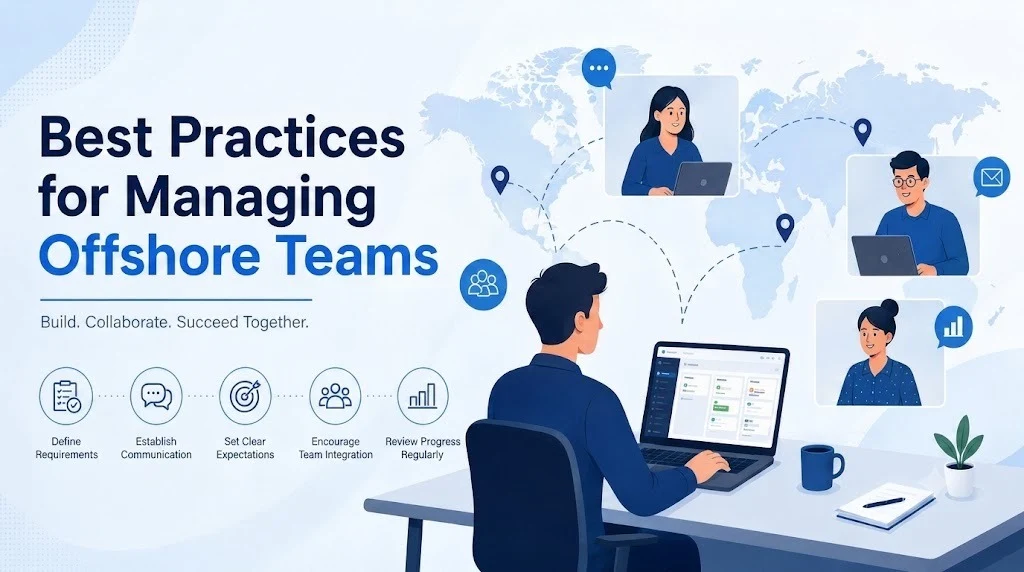 Successful offshore team management requires businesses to establish clear processes before the team begins working.
Beyond addressing individual challenges, businesses should create a consistent approach to communication, responsibilities, performance, and project monitoring.
- Define Project Requirements
Businesses should clearly communicate the project scope, required skills, deliverables, timelines, and responsibilities.This gives the offshore team a better understanding of what is expected from them. - Establish Communication Processes
Decide how the teams will communicate and which tools will be used for different activities.For example, meetings can be used for project discussions, while written communication can be used for routine updates and documentation. - Set Clear Performance Expectations
Define the expected deliverables and project milestones. This makes it easier to evaluate progress and identify areas that require attention. - Encourage Team Integration
Offshore professionals should be treated as part of the wider project team. Including them in relevant meetings and discussions can improve collaboration and help them understand the project better. - Review Progress Regularly
Regular reviews help businesses understand what has been completed, what is currently in progress, and whether there are any project blockers.This makes offshore project management more organised and helps businesses respond to issues earlier
When Should Businesses Consider Offshore Teams?
Offshore teams can be useful for businesses that need additional technical capabilities or development capacity.
Businesses may consider an offshore team when they:
- Need Additional Technical Skills – Companies can bring in professionals with specific technology expertise required for a project.
- Need to Scale Development Teams – Businesses can increase their development capacity based on project requirements.
- Have Short-Term Project Requirements – External professionals can support projects without requiring permanent hiring.
- Need Remote Development Support – Businesses can work with remote technology professionals as an extension of their internal team.
The right model depends on the project’s requirements, available internal resources, and technical skills needed.
How to Choose the Right Offshore Technology Partner
Choosing the right partner is important for successful offshore team management. Businesses should consider the following factors:
- Technical Expertise – Check whether the provider has professionals with the skills required for the project.
- Talent Quality – Understand how professionals are evaluated before being assigned to projects.
- Team Integration – Make sure professionals can work with the company’s existing team and processes.
- Scalability – Check whether the team can be expanded or adjusted when project requirements change.
- Communication – Understand how the provider manages communication between clients and professionals.
- Project Support – Check whether the provider offers support throughout the engagement.
- Security and Processes – Understand how access to project systems and information is managed.
A suitable partner should make it easier for businesses to add technical professionals without disrupting their existing workflows.
Why Choose Sebone Technologies for Offshore Teams?
Sebone Technologies can help businesses address offshore team challenges while maintaining collaboration and alignment across locations.
Dedicated offshore development teams and IT staff augmentation services help businesses add technology expertise and development capacity while integrating with existing processes.
These distributed-team practices help address geographic, language and cultural barriers and support collaboration across globally distributed teams.
Businesses can choose full-service development teams or in-house team augmentation, with process transparency and project visibility built into the engagement.
Conclusion
Managing an offshore team requires proper planning and communication. Challenges such as communication gaps, time-zone differences, cultural differences, unclear responsibilities, and onboarding can affect project delivery if they are not managed properly.
Businesses can overcome these offshore team challenges by establishing clear communication processes, documenting project requirements, defining responsibilities, setting clear expectations, and regularly reviewing progress.
With the right approach to offshore team management, businesses can access technical expertise and increase development capacity while maintaining strong collaboration with their internal teams.
Ultimately, successful offshore teams are built not just by finding the right technical talent, but by creating the right environment and processes for that talent to succeed.
FAQ’s
What is the biggest challenge in managing an offshore team?
Communication gaps are typically the most significant challenge, as they can lead to misunderstood requirements, duplicated work, and delays. Establishing clear channels and thorough documentation helps close these gaps.
How do businesses handle time-zone differences with offshore teams?
Identifying overlapping working hours for critical meetings, using written updates for routine communication, and establishing a clear process for urgent issues allows teams to collaborate effectively despite the time gap.
How can businesses ensure quality when working with offshore teams?
Defining clear quality expectations upfront, establishing consistent development and testing processes, and conducting regular reviews with ongoing feedback help maintain consistent quality across internal and offshore work.
What should businesses look for in an offshore technology partner?
Key factors include verified technical expertise, a rigorous talent vetting process, the ability to integrate smoothly with existing teams, scalability, clear communication practices, and strong security processes.
How can teams overcome cultural differences in offshore collaboration?
Setting clear expectations early, encouraging open communication, and actively including offshore professionals in team discussions helps build mutual understanding and respect for different working styles.
What tools help improve project visibility with offshore teams?
Project management platforms that track milestones and deliverables, combined with regular progress reviews and clear documentation, give managers visibility into offshore work without needing to monitor every task manually.
How should responsibilities be divided between internal and offshore teams?
Responsibilities should be clearly defined before the project begins, with specific ownership assigned to individuals and a clear escalation process for decisions that fall outside someone’s defined scope.
What makes offshore onboarding effective?
Preparing documentation in advance, granting access to necessary tools before day one, and introducing new team members to relevant colleagues all help offshore professionals become productive faster.
Is staff augmentation different from a fully offshore development team?
Staff augmentation adds individual professionals directly into your existing team, while a full offshore development team typically operates with its own internal structure delivering complete project components under shared oversight.
How does knowledge sharing prevent problems in offshore projects?
Maintaining updated documentation and shared knowledge repositories ensures offshore team members have full context even when requirements change, reducing reliance on informal conversations that may not reach everyone.